
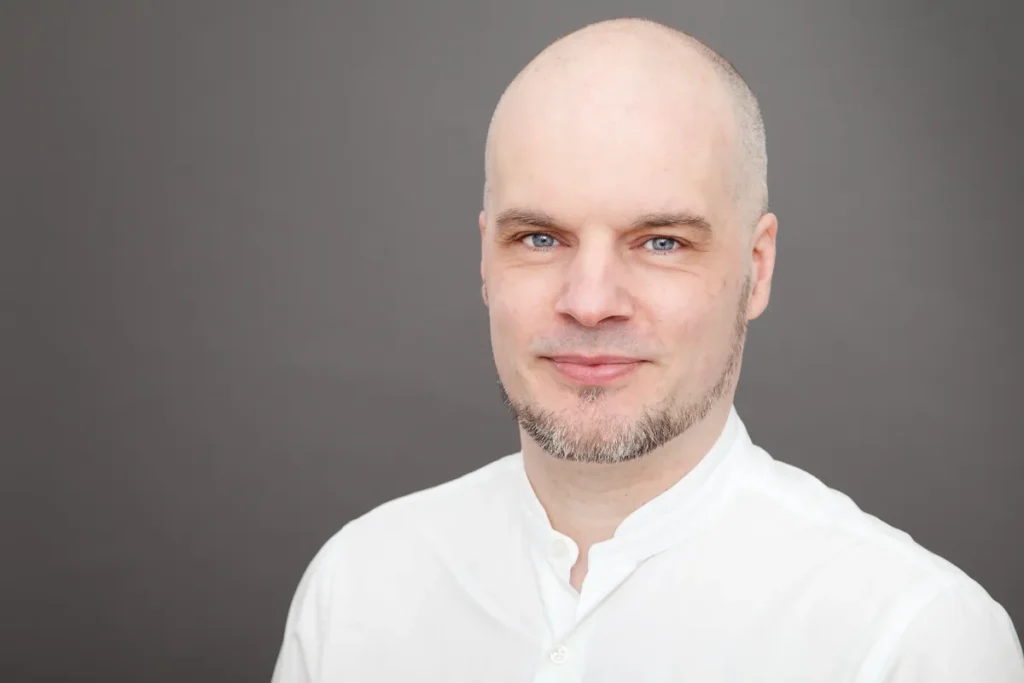
About Mark
My journey into this work began over 35 years ago with martial arts. What started with physical training gradually opened into a much wider exploration of the body, mind and human potential.
35+ years of movement & practice
Martial arts led me into Zen, Qigong, meditation and Chinese medicine — not simply as things to study, but as practices I explored and experienced for myself.
Injury became part of that journey too. Years of training and full-contact fighting brought injuries and periods when I had to find my own way back. Going through that process gave me a very personal experience of recovery — learning to understand my body differently, work with its limitations and gradually rebuild movement, strength and confidence.
A particularly formative period was a four-year apprenticeship in Tui Na Chinese medical massage. The traditional way of learning was very hands-on, with a strong emphasis on developing the art of touch and palpation — learning to listen through the hands and becoming more sensitive to changes in tissue, tension and movement. These are skills that develop through attention, practice and experience over time.
26+ years of clinical experience
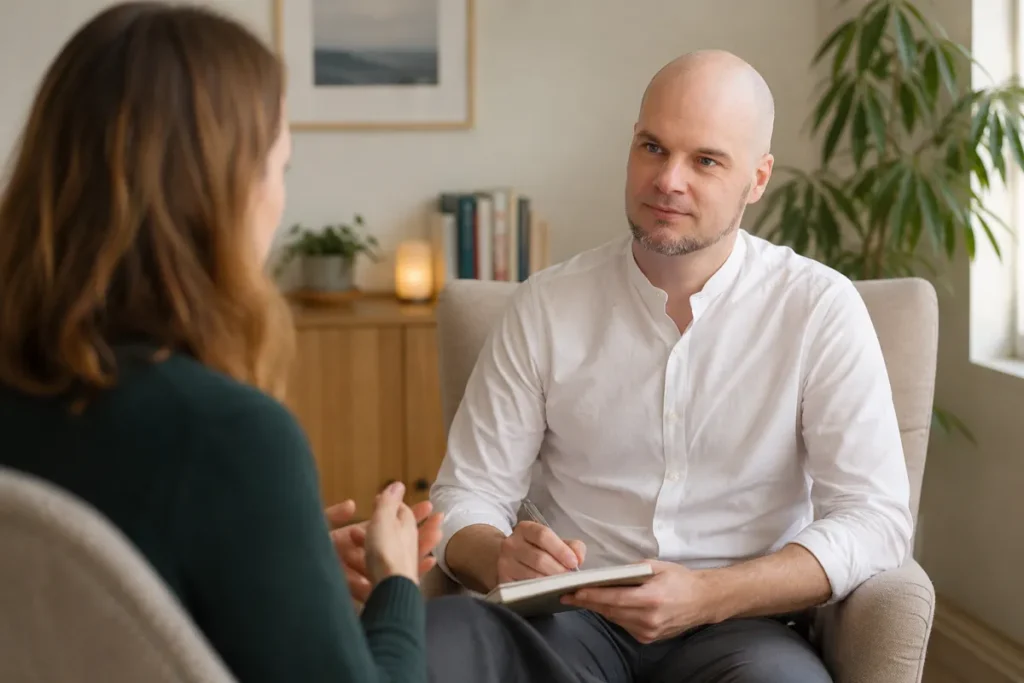
My professional life took this exploration in another direction. I trained as a Mental Health Nurse and have spent more than 26 years working in mental health and psychological therapy in the UK and Australia.
Throughout that time, I continued to study and develop professionally, completing postgraduate training in Cognitive Behavioural Therapy (CBT) and Clinical Hypnotherapy, alongside further training in mindfulness and other psychological approaches.
Working with people for so many years has been an education in itself. Professional training gives you knowledge and a framework, but experience develops something different — the ability to listen, observe, assess and recognise what may be important for the individual in front of you.
Bringing the physical work together
The physical side of my work was always there, and returning to it professionally felt less like a new direction and more like reconnecting with something I had been exploring for much of my life.
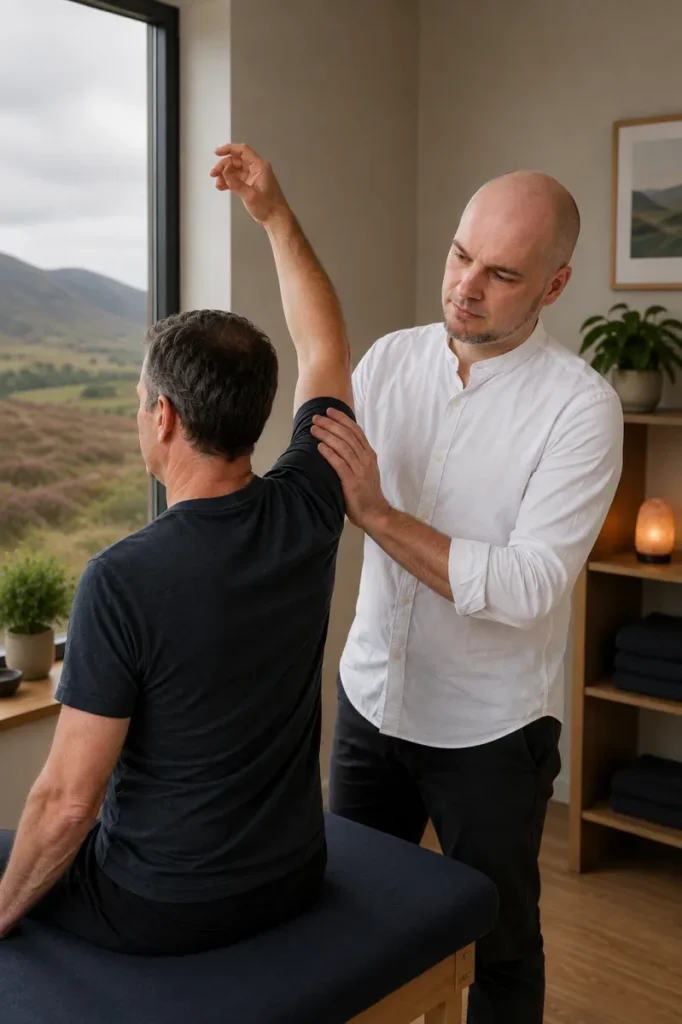
Sports therapy brought a contemporary understanding of physical assessment, anatomy, movement, injury and rehabilitation. It gave me a more structured way of assessing what I was seeing and feeling, while building on the sensitivity to touch, palpation and movement developed through years of traditional practice.
Over time, these different strands — personal exploration, traditional training, professional study and clinical experience — have become less separate. Each has informed the other, and together they continue to shape and develop the way I work today.
Moving to the Scottish Highlands has given me the opportunity to bring these different parts of my work together through Living Health.
Looking back, there has been a common thread running through much of my life: a curiosity about what we are capable of as human beings — how we develop, how we adapt, how we recover and what we can discover about ourselves through that process.
Living Health feels like a natural continuation of that journey.
Training & Qualifications
My training has developed alongside my own practice and professional experience, bringing together sports therapy, bodywork, movement, Chinese medicine and psychological therapy.
Sports Therapy & Bodywork
- Level 5 Sports Therapy
- Level 5 Sports Massage
- Tui Na Chinese Medical Massage
- Thai Trigger Point Therapy
- Acupuncture
- Cupping Therapy
- Sports Taping
Movement & Traditional Practice
- Qigong Instructor
- Tai Chi Instructor
- Martial Arts Instructor
- Advanced Mindfulness Instructor
- Zen Compassion Meditation Teacher
- Over 35 years of personal practice and study across martial arts, Qigong, meditation and traditional approaches
Psychological & Clinical
- Postgraduate Diploma in Cognitive Behavioural Therapy (CBT)
- Postgraduate Certificate in Clinical Hypnotherapy
- British Society of Clinical & Academic Hypnosis (BSCAH) Foundation Training
- Higher National Diploma in Mental Health Nursing
- Internal Family Systems (IFS) informed
- Survive & Thrive Group Facilitator
Alongside formal training, I bring more than 26 years of clinical experience working in mental health and psychological therapy in the UK and Australia, together with more than 35 years of personal practice, study and exploration of movement and the body.
My Approach
Treatment adapts with you
I don’t work from a set treatment formula. What you need when you first come to see me may be quite different from what you need several weeks later, so the way we work can change as you change.
The starting point is understanding what is happening now, what may be contributing to it and what you want to get back to doing.
From there, treatment can move through different stages.
Assess → Treat → Rehabilitate → Return
Assess
We begin by looking at what is happening — your symptoms, movement, previous injuries and the wider picture around them. Assessment continues throughout treatment rather than being something that only happens at the first appointment.
Treat
When pain, restriction or injury is the main problem, hands-on treatment may be the priority. I draw on different forms of bodywork depending on what I find and what feels most appropriate.
Rehabilitate
As things begin to change, we may introduce movement and rehabilitation to restore mobility, build strength and help your body adapt to increasing demands.
Return
The focus can then move towards getting you back to what matters to you — whether that’s everyday movement, work, walking, golf, running or sport. For someone already active, this may also mean looking at recovery and performance.
Hands-on treatment
Touch and palpation are an important part of how I work. Alongside assessment, they help me understand how your body is moving and where there may be changes in tension, sensitivity or restriction.
Depending on what we are working with, I may draw on sports therapy, sports massage and bodywork, acupuncture, cupping, IASTM and sports taping.
I don’t use techniques simply because they are available. They are tools, and I choose and combine them according to what I find and how you respond.
Movement & rehabilitation
Hands-on treatment can be useful, but sometimes the body also needs the opportunity to move, strengthen and adapt.
Rehabilitation may begin simply, particularly after injury or when movement has become uncomfortable or guarded. As confidence and capacity return, we can gradually build towards the demands of your everyday life, work or sport.
For someone returning to a particular activity, this can become increasingly specific — developing the movement, strength and physical confidence needed to get back to doing it.
Mind & body
My background in mental health and psychological therapy also influences how I understand pain, injury and recovery.
Pain isn’t experienced in isolation. When it has been present for a long time, it can begin to affect movement, sleep, mood, confidence and the way we relate to our body. Stress and lifestyle can also influence how we recover and how much capacity we have at any particular time.
Where it is useful, I can draw on my psychological training alongside the physical work. This might involve helping someone understand their relationship with persistent pain, working with confidence following injury, or using clinical hypnotherapy, imagery and visualisation as part of rehabilitation or performance.
Another way of looking
My background in Chinese medicine, Qigong and traditional bodywork gives me another way of looking at what presents in treatment.
I use this alongside my understanding of anatomy, physical assessment, movement and rehabilitation, rather than seeing traditional and contemporary approaches as competing with one another.
Sometimes one perspective is more useful than another. At other times, looking at something from several directions can help us understand a pattern that isn’t immediately obvious.
Ultimately, my approach is about having enough knowledge, experience and different ways of working that treatment doesn’t have to fit into one particular method.
The method adapts to the person, rather than asking the person to fit the method.